
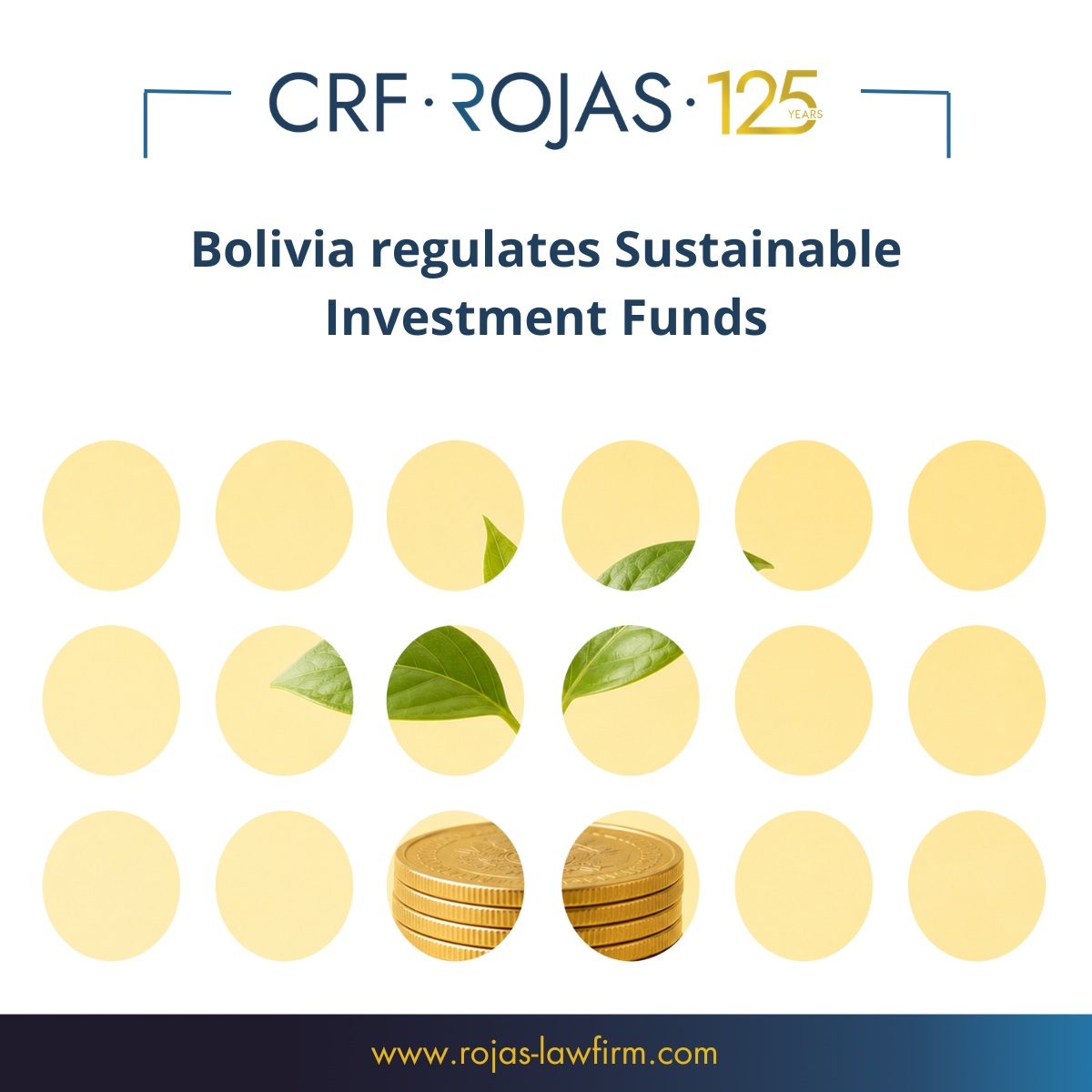
The Autoridad de Supervisión del Sistema Financiero (ASFI) has established a dedicated regulatory category for Sustainable Investment Funds, extending Bolivia's collective investment framework to vehicles that pursue measurable environmental or social outcomes alongside financial return. The measure is the first in Bolivia to give impact capital a defined legal form rather than leaving it to be accommodated within the general fund regime.
What the framework establishes
The regulation creates Sustainable Investment Funds as a distinct species of collective investment vehicle, administered by a licensed fund management company (Sociedad Administradora de Fondos de Inversión) under the existing securities market architecture. The distinguishing feature is not the asset class but the mandate: the fund's constitutive documents must commit it to investment criteria that incorporate environmental, social, or governance objectives, and those criteria must be capable of assessment.
Three obligations do the substantive work. First, the fund's prospectus and internal regulations must state its sustainability objective in terms specific enough to be tested. Second, the fund manager must adopt a methodology for selecting and monitoring assets against that objective. Third, the manager must report periodically on performance against the stated criteria, in addition to ordinary financial reporting.
The regulation does not merely permit sustainable investment. It defines it, and in doing so it sets the standard against which every claim of sustainability in the Bolivian market will now be measured.
Why the definitional element matters most
The commercial significance of the framework lies less in what it permits than in what it constrains. Before this measure, a Bolivian fund could describe itself as sustainable without any regulatory obligation to substantiate the description. The new category imposes a definition, a methodology requirement, and a reporting duty. The effect is to convert sustainability from a marketing attribute into a regulated representation.
That has consequences for two groups. Managers already operating funds marketed on environmental or social credentials will need to consider whether their existing disclosure would withstand assessment against the new standard. Managers intending to launch new vehicles now have a defined route to market — and a defined benchmark they will be held to.
Practical implications for fund managers
Managers contemplating a Sustainable Investment Fund should treat the sustainability methodology as a core structuring document rather than an annex. The methodology determines the investible universe, drives the monitoring obligation, and will be the primary reference point in any supervisory review. Drafting it loosely to preserve flexibility is a false economy: a methodology that cannot be tested cannot be defended.
Attention should also be paid to the interaction with existing portfolio holdings. Where a manager intends to reclassify or restructure a current fund into the new category, the transition will require both investor consent mechanics under the fund's existing rules and a substantive review of whether the portfolio as constituted satisfies the stated criteria.
The wider context
The framework arrives during a period of substantial regulatory movement in the Bolivian financial system. Read alongside the recent revision of the regime for financial technology companies and the changes to the foreign exchange framework, it forms part of a visible effort to modernise the instruments available to the domestic capital market and to make Bolivian vehicles legible to international investors applying their own sustainability mandates.
For international institutions with allocation requirements of their own, the significance is straightforward: Bolivia now has a fund category whose sustainability claims rest on a regulatory definition. That is a precondition for participation that did not previously exist.
How we can help
Our Banking & Finance and Corporate & Commercial teams advise fund managers, sponsors, and institutional investors on the structuring, authorisation, and ongoing compliance of collective investment vehicles in Bolivia. We are available to review existing fund documentation against the new requirements, to structure new vehicles within the category, and to advise on the reclassification of existing funds.